For any fellow disabled writers who may not have this on your radar, #PitchDis is currently ongoing. I’ve taken the below block directly from an email they sent to me and bolded the dates:
Pitches will only be accepted September 9 through 8pm EDT September 11. When the pitch window closes, it closes for good. The form link will be emailed to subscribers on September 9, and will also be posted on Bluesky, Twitter, Instagram, and pitchdis.com.
If you have any questions or need clarification about anything please email contactpitchdis@gmail.com
AI generated woman writer
#PitchDis is an opportunity for unrepresented disabled writers to post a 300 character pitch for a finished manuscript, basically any genre (you will indicate the genre in the form provided when submitting.)
Each writer can post up to 2 projects. Any over that will be deleted. Agents and editors who are participating will then review the posts and reach out by email if interested in seeing more.
Pitch events are always a long shot, but if you have a manuscript that is ready to go, and enough time to put together a 300 character (not word – character, think 2 well written, tight sentences) pitch, then you really don’t have anything to lose. Plus, I think it is good practice to work on a tight pitch for a work you’re going to be sending queries out for anyway.
Admittedly, I’ve noticed as I age, I have less appetite for fiction with magic/fantasy and am more interested in exploring the reality of all manners of shenanigans folx can get themselves into in the regular world. That kind of mischief is typically far freakier and odder than anything we fiction writers are going to come up with.
In an attempt to keep my reading from becoming too narrow, I join book clubs and get exposure to books I would otherwise not pick up. Of course, I’m always behind, with a to be read pile that’s spread out over shelves. My current read from one of my clubs is The Book Eaters.
Image of USA hardback book cover for The Book Eaters
Part way in, I started to have some logical problems with the world being built by author Sunyi Dean. I stopped to read her bio, which I hadn’t bothered with since it was after all, a book club pick. When I saw she identified as autistic my view of her world changed.
Something to understand about autistic writers is that we have obsessive level constraints about the worlds we make, e.g. there are rules, and they are thought through and followed, they just might not be the rules that another writer would have gone with. Knowing this, my internal critic was able to relax and trust, if I stuck with this work there would become evident reasons for all the choices being made.
Image of author Sunyi Dean
To be fair and reasonable, and in keeping with my training in philosophy, I ought to give this same benefit-of-the-doubt to all writers/books. Truth be told, though, I’ve been burned too many times.
I know I’m not the only reader who gets frustrated when an author has events happen that don’t fit into the world they’ve built, or has a character act dramatically out of character, or my biggest pet peeve, has something turn out to have ‘actually happened’ that they established earlier could not have happened. I don’t even mean deception to build a mystery sort of thing, I mean someone f’d up the continuity/editing and an event happened that couldn’t have.
Image of a Cosmic Explosion
I feel like making the unsupported claim that autistic writers are more likely to produce characters and worlds that stick to the internal rules of that character and world. My wish to make this claim may simply be based on my bias. But when it comes to this specific example, The Book Eaters and Sunyi Dean, I have been proven correct; the world contained within the pages remained true to itself and thus to the reader.
A rose by any other name and with any number of thorns is more pleasant to deal with than this book was
In the community of writers, there is an ongoing debate about ‘#ownvoice’ writing vs. ‘writing as a creative act’, e.g. a writer’s creativity should not be shackled by their lack of personal experience. Knowing that I have little positive to say about a book that someone else labored long and hard on is something I’ve put off for months. But this is also a cautionary tale for writers about why we all need to be careful about trying to tell other peoples’ stories.
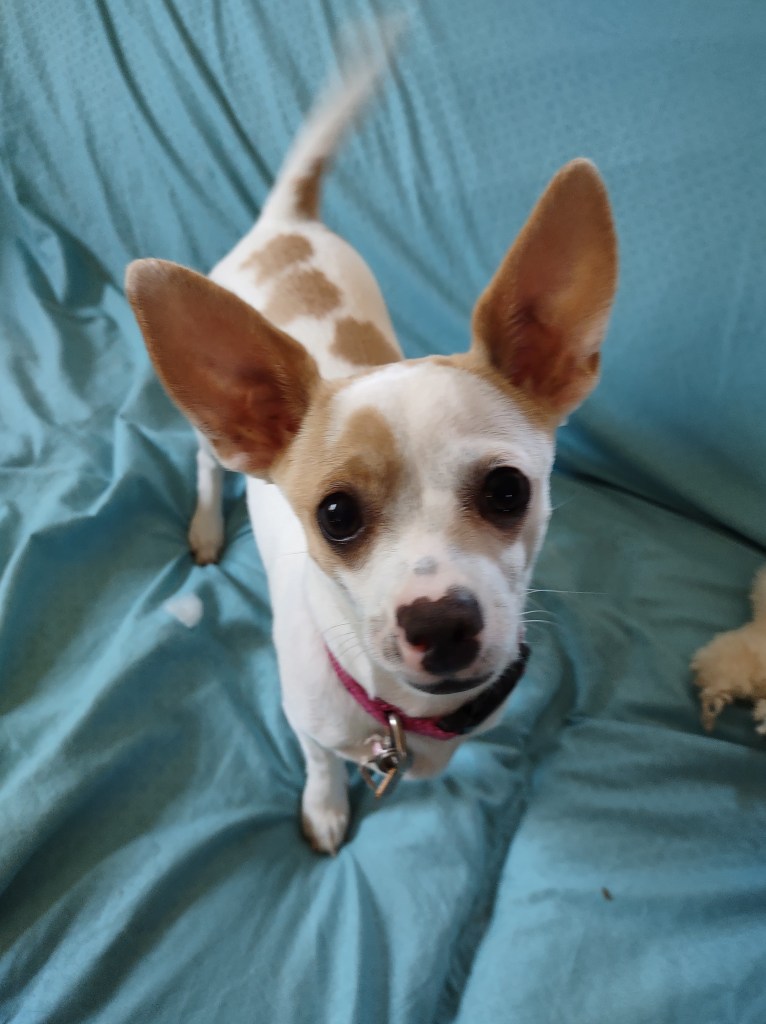
Pink rose being sniffed by chihuahua-dachshund pup
A cute puppy – Winnie – that I would rather spend time with:
There’s a great deal to be said for literary license, that allows us as creatives and writers to explore experiences that might be adjacent to what we’ve lived but aren’t our actual experience. Most writers, for example, will write both male and female point-of-view (pov) characters, while most writers will have lived from only one of those pov. . . and generally we as an audience are fine with that.
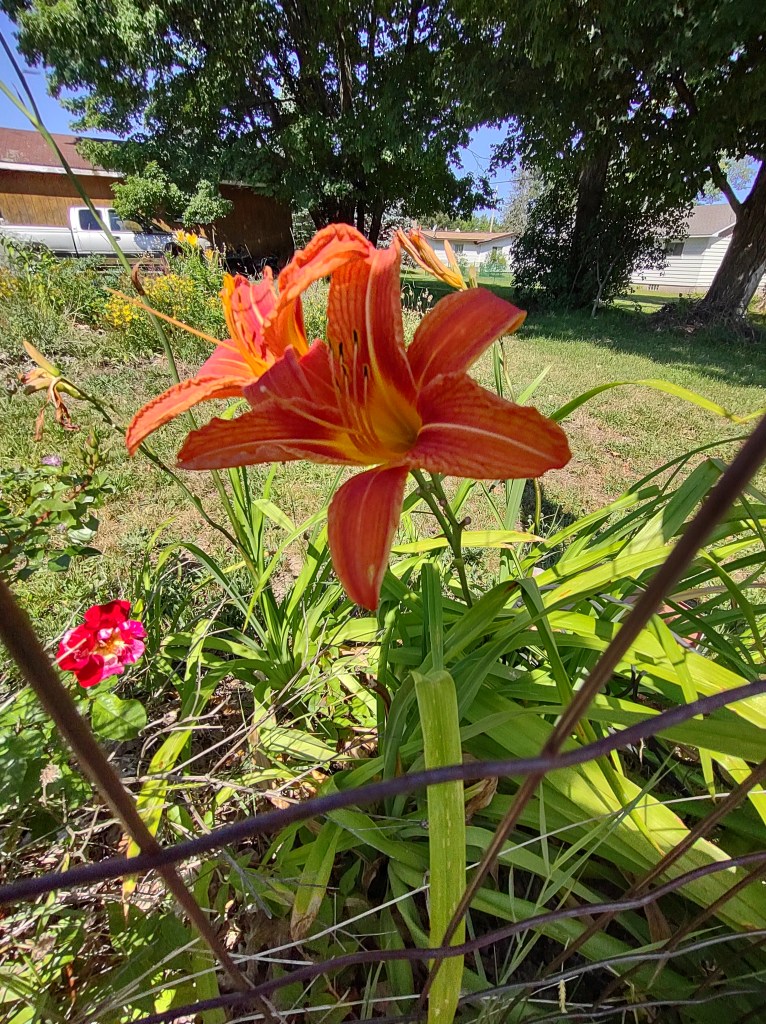
A day lily and 4th of July Rose that I would rather look at:
At the same time, I personally have read male writers’ women and thought, “They really don’t get it.” We – as writers – should still be allowed to explore different pov characters. And when we do, we also have to accept that we may be criticized for our take, particularly when we are writing from a pov rather far removed from our own. And when that pov represents a historically marginalized community . . . lots of room for trouble.
What is most frustrating for members of that marginalized community though, is when a book featuring ‘their’ pov is written badly by someone who is not a member of the community, yet does very well commercially. That is basically salt in the wound.
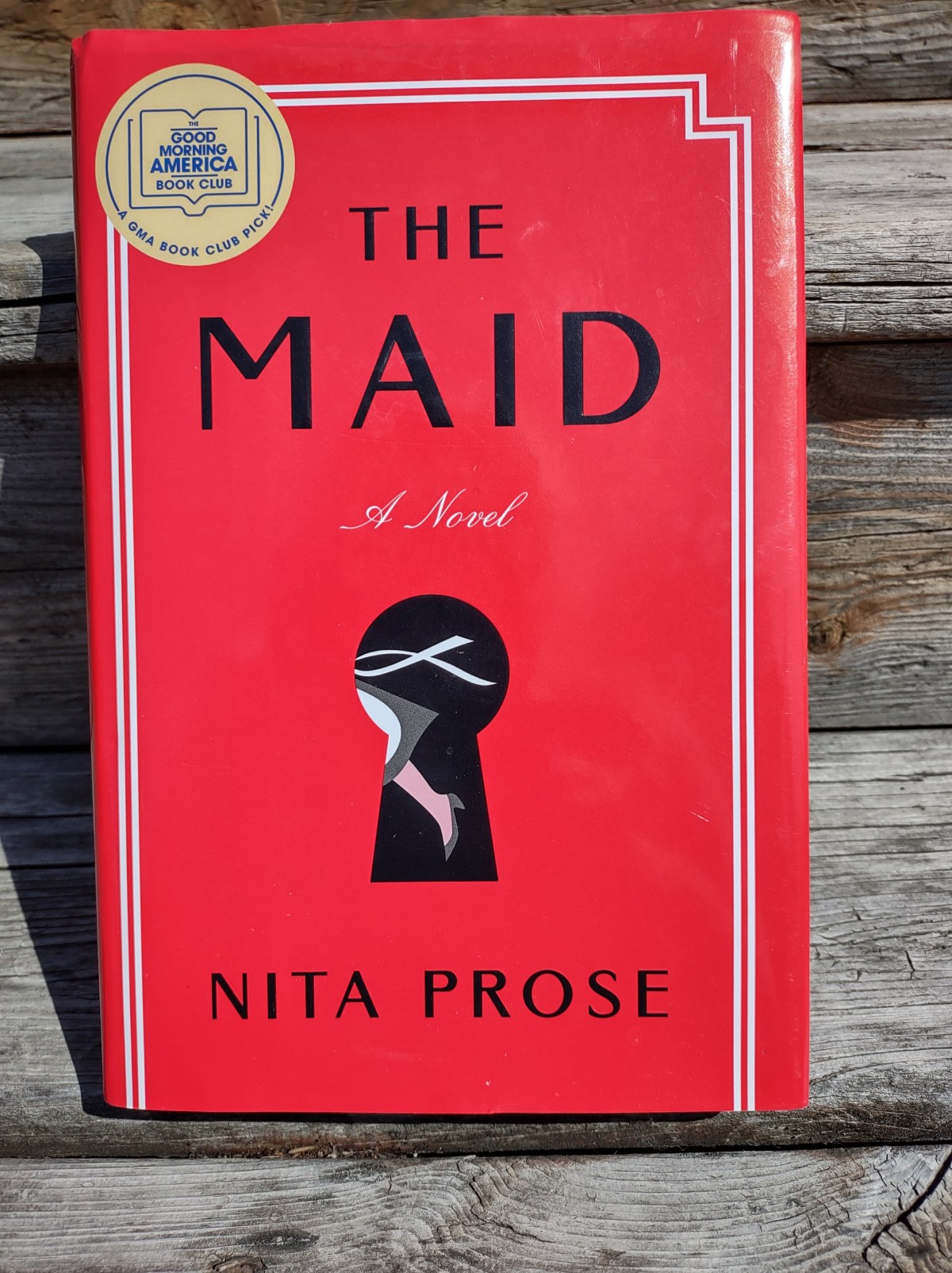
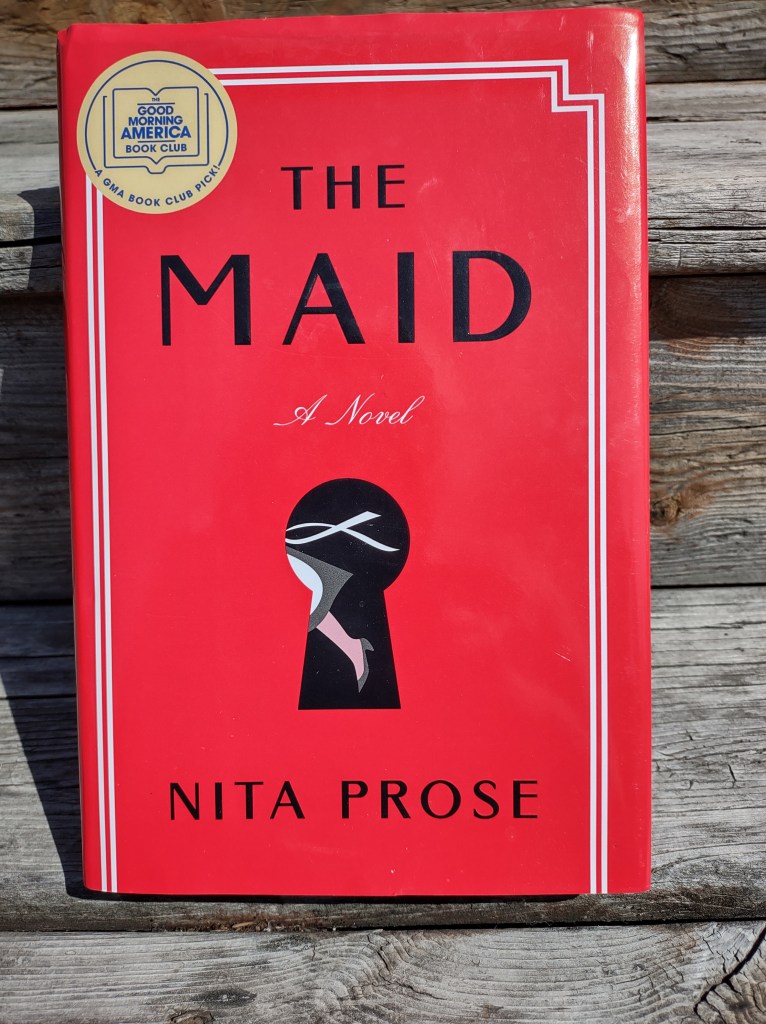
Our current case in point, The Maid.
The neurotypicals are loving this one . . .
To summarize what at least one person has commented, Publishers and writers seem to think if they don’t name the disability, then when they are called on the inaccurate portrayal they can say, ‘well we never said the person was x’.
There are stereotypical social portrayals of autism which invariably include Obsessive Compulsive behavior, including fascination with a fixed topic; an inability to decode social norms and expectations; naivete, particularly compared to same-age peers. Throw these all onto one character and people are going to read her as autistic.
Someone who is not autistic, writing an autistic pov is fine in theory. But when the portrayal turns the character into a puppet who is manipulated (that’s an autistic reading, not at all what the writer was going for) by the neurotypical characters who are ‘helping’ her – by having her rehearse lines to say, saving her when she’s in legal trouble, and caretaking her because she is portrayed as unable to be truly independent – well, don’t be surprised when autistic readers are offended.
Neurotypical readers, however, seem to generally love this story. They are amused by the ‘quirky’ pov, while being able to identify with her saviors who swoop in at key moments. They are not relegated to being the character who is incapable of orchestrating her own narrative. She’s the woodchip, they’re the waves who move her.
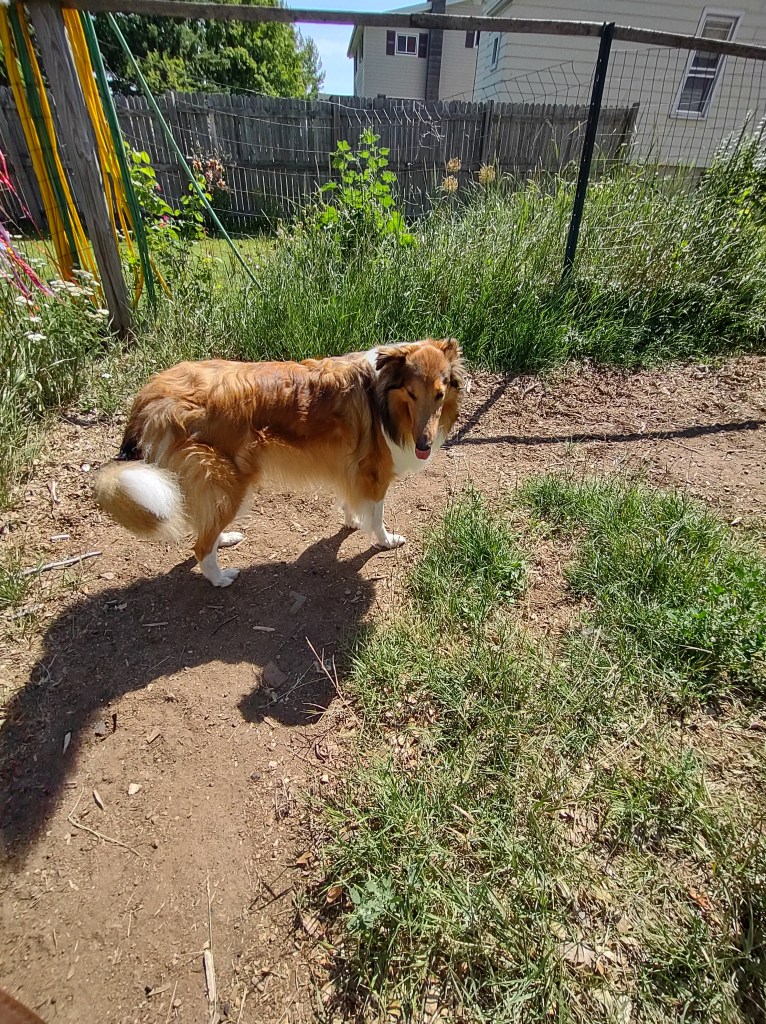
A Collie, whose barking I would rather listen to:
Note: because this whole endeavor has cost me a lot of spoons (please lookup spoon-theory if this is not a familiar term) I have randomly included images in this post that make me much happier than the topic itself has.
Neurodivergent readers: This is going to be turned into a film. And we all know the likelihood of them choosing a neurodivergent actor to play Molly is as low as it is likely that Ballantine Books will follow this book up with several written by #actuallyautistic writers.
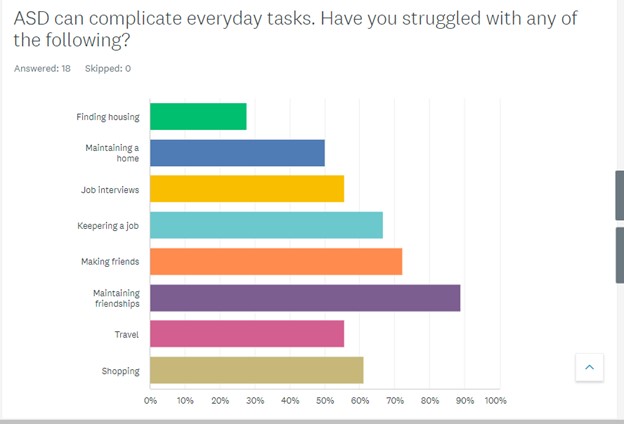
Back in 2018 I created a brief survey to begin collecting bare-bones input from other ASD folx about what they were finding most challenging in life.
Free image: Pixabay, PIRO4D
As a writer and academic, this is a topic that I would eventually like to address in a book that would hopefully help ASD folx and their communities (i.e. the rest of the world) by making it clearer the prejudices and struggles those of us on the spectrum face in day to day life. At the very least I’d like to create a conversation starting point amongst those who like some data, not just anecdotal evidence. To be clear, I value the stories of those with lived experience. But part of the audience would be made up of those who value data points.
I’d left the survey open and knew it was still hanging out in the virtual-verse. Then I got a notice that after several years someone had taken the few minutes to fill it out, adding another voice to the experiences being collected. And it occurred to me that it would be useful to keep adding voices to that survey and that by posting a link here, we might find a few more folx willing to share.
Responses to one of the central questions of the survey as of April 30, 2022.
This is a anonymous survey although respondents have the option of leaving an email address if they are willing to be contacted in the future.
I’d be interested in knowing (comment section) what topics you think should be covered if one had an opportunity to discuss being neuro-diverse with neuro-typical people?






 christyoslund